Local conditions
Nocatee pool deck paver sealing accounts for the whole enclosure
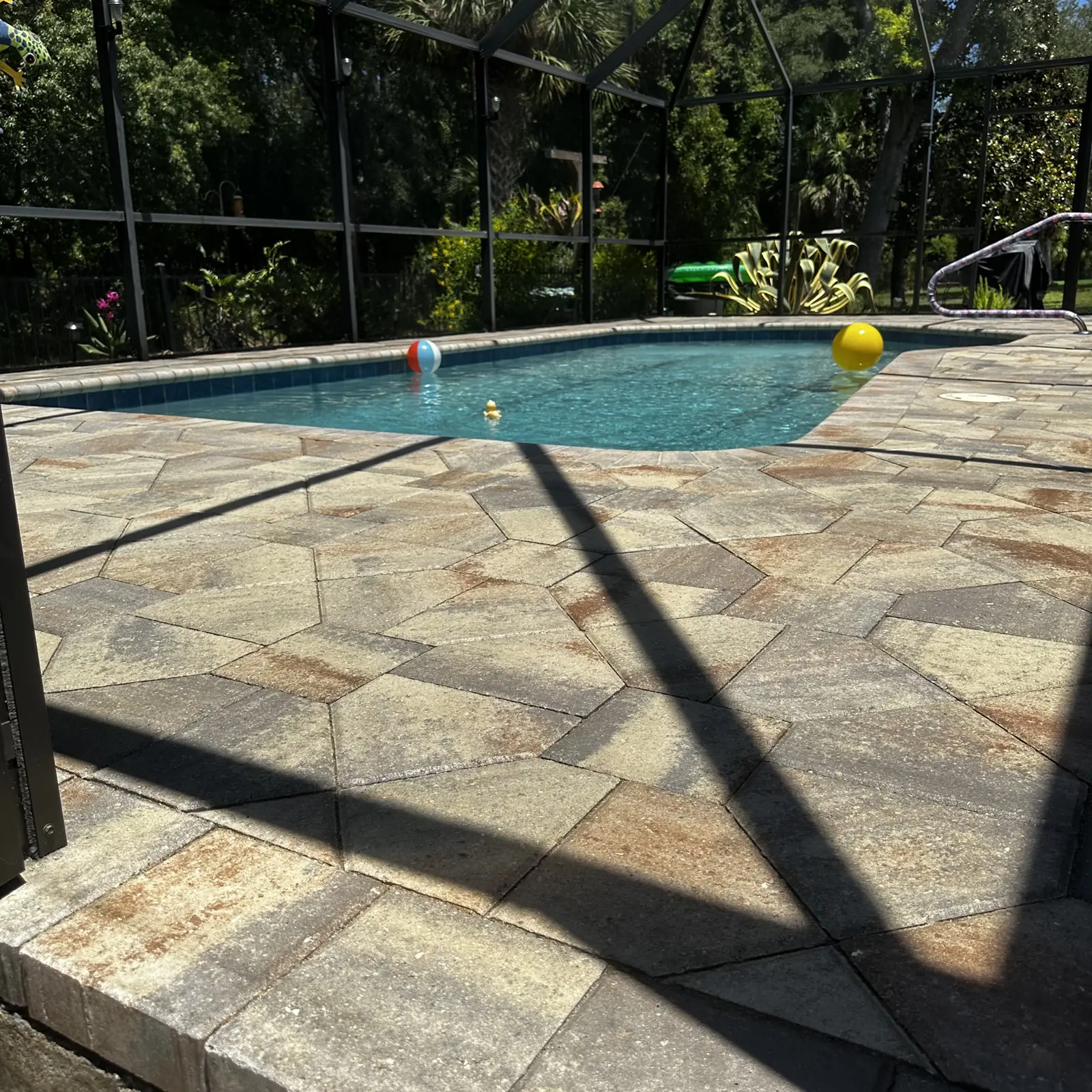
Nocatee pool deck paver sealing requires more than washing an open patio. Screen-enclosure airflow, persistent shade, pool splash, drainage and cage hardware all affect preparation, drying and product selection. HydroSeal evaluates those conditions before cleaning, replacing joint sand and applying sealer.
A Nocatee pool deck is a harder job than an open patio
A screened lanai may have less direct sun and slower airflow than an exposed patio. Permanent shade can keep joints and low areas damp, support organic buildup and extend dry-down after cleaning. Work is planned around the actual moisture and weather conditions rather than a fixed schedule.
Cage footers and uprights also create tight edges where dirt, water and stains collect. Rust staining should be evaluated and treated before sealing when practical. Applying sealer over untreated rust staining can trap or emphasize the discoloration and make later correction more difficult.
Salt cells change what happens at the coping line
Salt splash repeatedly wets the coping and nearby pavers. As water evaporates, moisture and minerals cycle through the surface. That can contribute to visible efflorescence, deposits at the waterline and gradual surface wear; it does not mean every saltwater deck will show the same damage.
A breathable paver sealer is selected to suit the material and existing system. An incompatible or overly heavy coating can contribute to trapped moisture, clouding or adhesion problems, particularly when preparation or dry-down is inadequate. Correction may require stripping or other specialty preparation, depending on whether the haze is on the surface or trapped beneath an existing coating.
Timing
If your pool deck is new, do not seal it yet
A new installation should be allowed to cure and then evaluated before sealer is applied. New pavers may release visible mineral residue as moisture moves through them. Sealing before the surface is ready can trap or emphasize haze and may require corrective preparation later.
Evaluate the surface, not just the calendar
Many new installations are allowed to cure for approximately 60 to 90 days before evaluation, but the correct timing depends on the paver manufacturer, installation conditions, moisture, weather and visible efflorescence. Existing white bloom should be identified and treated as appropriate before sealing. A clean-looking surface still needs adequate dry-down.
Traction
Traction is the requirement, not a feature
Any pool patio can become slippery when wet, so the system must be chosen and applied with wet-area use in mind. Traction depends on the paver texture, sealer type, application rate, finish, contaminants, water and maintenance. Any sealed pool deck may become slippery when wet.
Finish and application matter
Natural-finish penetrating systems generally preserve more of the original surface appearance. Enhanced-color systems deepen color and may create a different feel and sheen. Product choice, measured application and the deck's existing texture must be considered together; no finish eliminates slip risk.
Joints and drainage
Joint sand near a pool has a specific job
Splash-out and runoff can wash weak joints toward drains or into the pool area. Low sand allows movement, and continued movement can lead to rocking pavers. Joint sand replacement restores the joint profile before sealer is applied.
Stabilize without ignoring drainage
HydroSeal generally uses ASTM C144 kiln-dried joint sand with a joint-stabilizing sealer. The appropriate joint material depends on the paver system, drainage, existing materials and project conditions. Sand is installed into suitable, dry joints and the sealer is applied to support joint stabilization without blocking intended drainage paths.
Straightforward estimates
What a Nocatee pool deck costs
Pool deck sealing in Nocatee starts with the material and measured area, then accounts for preparation and repairs. The current starting rates below match HydroSeal's cost calculator.
| Service | Starting rate |
|---|---|
| Concrete or brick paver pool deck | $1.50 per sq. ft. |
| Travertine or natural stone | $1.60 per sq. ft. |
| Efflorescence treatment | +$0.05 per sq. ft. |
| Failed-sealer stripping | +$1.50 per sq. ft. |
| Paver repair or releveling | $8 per paver |
| Retaining wall, planter, column or fire-pit sealing | $1.00 per sq. ft. |
Rates are starting estimates and may vary based on deck size, material, surface condition, screen-enclosure access, previous coatings, efflorescence, stain treatment, repairs, drainage and required preparation. Final pricing is confirmed after photo review or inspection.
Use the paver sealing cost calculator for a preliminary range, then request a final review.
Service area
Serving every Nocatee neighborhood
HydroSeal provides paver cleaning and sealing in Nocatee communities in St. Johns and Duval counties, subject to scheduling and project fit.
Homeowners can also review Nocatee driveway paver sealing and material-specific guidance for Nocatee travertine sealing, including travertine pool deck sealing.